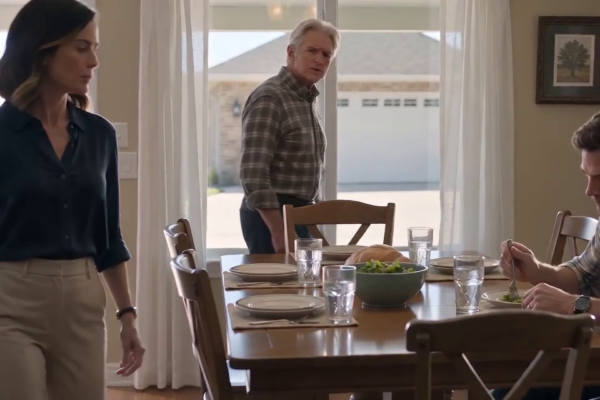
My Parents Spent Thousands on My Younger Sister Emily’s Baby Shower While I Sat There in My Third Trimester, Then Came to the Hospital After My Son Jack Was Born With Gas-Station Flowers and Said They “Couldn’t Afford” a Gift—Three Days Later, I Learned They Had Just Bought Emily a Brand-New SUV Because Apparently My Being “Self-Sufficient” Meant I Needed Less
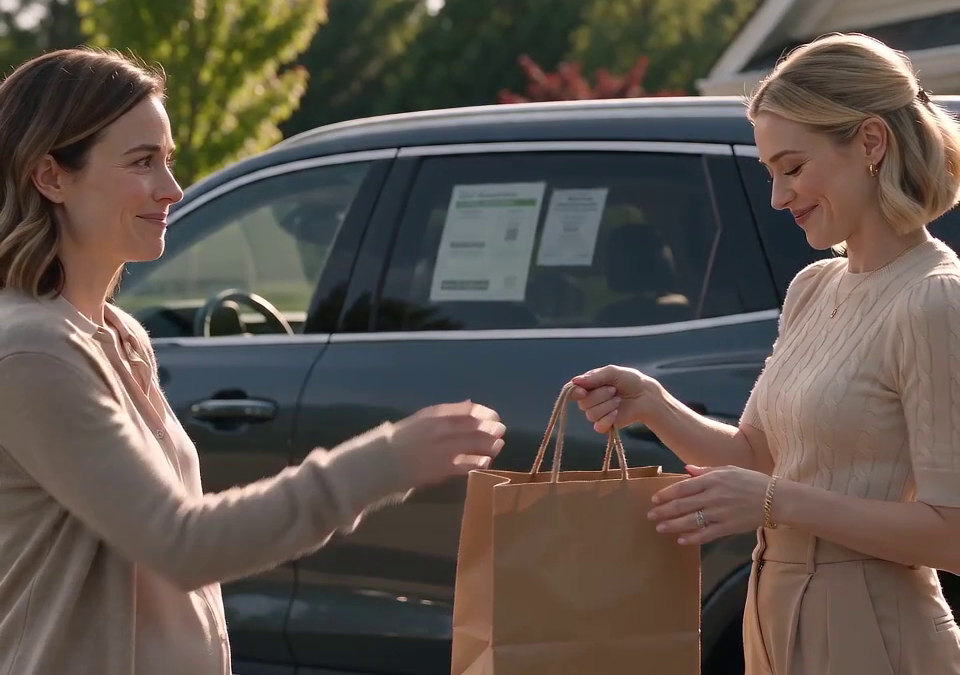
I never expected my parents to throw me an extravagant baby shower.
That matters.
I wasn’t asking for fireworks.
I didn’t need a rented ballroom, a wall of flowers or an event designed for social media.
I wanted effort.
Recognition.
Something that said my parents were genuinely happy that I was becoming a mother.
I didn’t understand how much I wanted that until I watched them give all of it to my younger sister Emily.
Emily became pregnant before I did.
When she announced it, Mom and Dad behaved as though the family had been waiting generations for this exact child.
They rented a private venue for her baby shower.
Not someone’s backyard.
Not the church hall.
A proper event venue.
They hired a professional planner.
There were customized centerpieces with the baby’s initials.
A designer cake.
A photographer who specialized in maternity events.
A champagne tower for the guests.
More than fifty people attended.
Some were relatives I hadn’t seen in years.
Mom bought a new dress.
She even had her nails done to coordinate with the color scheme.
I remember watching her show them to somebody.
Soft pink.
Tiny gold stars.
She was delighted.
Here was the strange part.
I was pregnant too.
Very pregnant.
By Emily’s shower, I was already in my third trimester.
I spent most of that afternoon shifting my weight because my back hurt and finding excuses to sit down.
People congratulated me when they remembered.
Mostly, they talked about Emily.
I didn’t object.
The party was for her.
I told myself my parents knew that my turn was coming.
I had spent most of my life telling myself similar things.
My turn will come.
They’ll notice later.
They know I don’t need as much attention.
Emily had always been easier for them to celebrate.
She was outgoing.
Beautiful.
High-achieving in ways people could display publicly.
Prom queen.
Straight A’s.
Student council.
She had the kind of personality that gave my parents stories to tell.
I was quieter.
Books.
Work.
Private accomplishments.
If Emily entered a room, Dad’s face changed.
Mom immediately asked questions.
If I told a story, someone usually found a way to bring Emily into it.
When I got into college, Mom and Dad congratulated me.
Then almost immediately started discussing a future trip to tour Emily’s dream school.
She wasn’t even ready to apply yet.
When I received an award at work years later, I brought it to Mom because some small part of me still hoped to see pride on her face.
She looked at it.
“That’s nice, dear.”
Then she brightened.
“Did I tell you Emily is getting a raise?”
It was never one enormous act of rejection.
That would almost have been easier.
It was accumulation.
Small comparisons.
Different levels of excitement.
Different assumptions about who needed what.
Mom and Dad fed me.
Clothed me.
Paid normal childhood expenses.
I was not mistreated in the obvious sense.
But there is a difference between caring for a child and making that child feel seen.
I learned not to need much.
That became part of my identity.
Rachel is independent.
Rachel is responsible.
Rachel can handle herself.
Strength without support eventually feels a lot like being forgotten.
Then I became a mother.
Two months after Emily’s shower, I gave birth to a healthy baby boy.
Jack.
We named him after my grandfather.
The delivery was harder than I expected.
Still, the second Jack was placed in my arms, I understood why people use ridiculous phrases about life changing instantly.
My world reorganized itself.
I called Mom and Dad from the hospital.
I was exhausted and emotional.
More than anything, I wanted them to come meet him.
Eventually they arrived.
Dad carried flowers.
Gas-station flowers, if I had to guess.
Mom carried a generic card.
Inside was a short message.
Love you.
There was no gift for Jack.
Again, the object itself did not matter.
Mark and I had prepared for our baby.
Jack had clothes.
Blankets.
A crib.
Everything he needed.
But I remembered Emily’s private venue.
The photographer.
The designer cake.
Fifty guests.
The champagne.
So I asked Mom gently.
“Did you guys decide not to bring anything for the baby?”
Her expression immediately became apologetic.
“Oh, honey.”
She touched my arm.
“We’ve had so many expenses lately.”
Dad nodded.
Mom continued.
“We just couldn’t afford anything right now.”
I smiled.
“Of course.”
I thanked them for coming.
After they left, I stared at the flowers for a while.
I didn’t cry.
Mostly, I felt stupid for being surprised.
Three days later, I drove to Emily’s house.
She had left some clothes at mine and I wanted them out of the way.
I pulled into the driveway.
That was when I saw the SUV.
Brand new.
Dealership tags.
Perfect paint.
The kind of purchase that announces money had recently changed hands.
I sat behind the steering wheel looking at it.
Emily came outside.
She followed my eyes.
Then smiled.
“Oh yeah. Mom and Dad surprised us with it last week.”
Last week.
The same week they couldn’t afford a baby gift.
“Isn’t it amazing?”
“It is.”
“I’ve always wanted one.”
I handed her the clothes.
Then went home.
That evening, I put Jack to bed.
Mark found me sitting on the couch.
He knew immediately that something was wrong.
He sat down beside me.
He didn’t say:
What happened?
He knew I would speak when I was ready.
Eventually I told him about the SUV.
Then about the hospital.
Then Emily’s baby shower.
Then things I had never really explained because repeating childhood favoritism as an adult can make you feel childish even when the pattern remains real.
Mark listened.
Finally I said:
“We need to upgrade the garage.”
He looked confused.
“The garage?”
“Just trust me.”
He did.
Years earlier, an aunt had left me a small inheritance.
I used part of it to purchase a duplex.
It wasn’t glamorous.
It was simply a decent investment property.
Over time, the building appreciated.
The rent gave us steady additional income.
My parents barely knew about it.
Emily didn’t.
I had never felt any need to advertise it.
The morning after talking with Mark, I called a realtor.
The duplex went on the market.
The sale moved quickly.
Within days, we were in escrow.
I understood how strange that might sound.
Selling an appreciating property because my parents bought my sister an SUV?
But that wasn’t really what I was doing.
I had reached a point where I needed to make a decision that represented the opposite of everything my family had taught me.
I didn’t have to remain modest so other people could remain comfortable.
I didn’t have to pretend I couldn’t have something simply because nobody had imagined me having it.
I didn’t need their permission to enjoy what I had built.
The garage was cleared.
We refinished the floors.
Painted.
Changed the lighting.
Then I bought the car.
Expensive.
Elegant.
Not ridiculous.
But definitely beyond what my parents believed I would ever purchase.
I didn’t post it.
I didn’t drive past Emily’s house.
I didn’t call Mom.
When Mark saw it for the first time, he started laughing.
“Okay.”
He looked at me.
“Now you have to tell me what this is about.”
I leaned against the doorway.
“Just a reminder.”
“Of what?”
“That I don’t need anyone’s leftovers.”
He understood.
But the car was only half of what I planned.
On the other side of the garage, I built something for Jack.
A nursery display.
A restored vintage crib.
Sage-green linens.
Subtle gold trim.
A matching rocking chair.
Children’s books.
A restored dresser.
Framed photographs of Jack.
It wasn’t where he actually slept.
His real nursery remained inside the house.
This was symbolic.
Above it, I mounted a small wooden plaque.
There were no public posts.
No audience.
It was for the day my family eventually arrived.
Two weeks passed.
Then, on a lazy Sunday afternoon, I heard a car outside.
Mom and Dad.
Emily was with them.
They had not called.
Of course they hadn’t.
Mom carried a small gift bag.
She was cheerful.
“We brought something for our little boy.”
Jack was outside walking with Mark.
Mom gave me the bag.
Inside were a few onesies.
A plastic rattle.
A bib.
I thanked her.
Dad looked around.
Then he glanced toward the back door.
“Did you ever organize the garage?”
I almost smiled.
“Yes.”
I unlocked the door.
Then opened it.
Light from the house caught the car first.
Dad stopped.
Mom followed him into the garage.
Emily came last.
None of them said anything immediately.
Dad circled the vehicle slowly.
Mom stared at the interior.
Emily crossed her arms.
Finally Mom asked:
“Who bought you that?”
Not:
Is that yours?
Not:
Congratulations.
Who bought you that?
Because even standing in my own garage, their first assumption was still that something impressive in my life must have come from someone else.
“I did.”
Mom blinked.
I smiled.
“Just a little something I could afford since nobody else could.”
Dad stared at the car.
Emily looked from him to me.
But then Mom noticed the other side of the garage.
The crib.
The chair.
The books.
The photographs.
She stepped toward it.
For the first time, her expression changed in a way that had nothing to do with money.
Then she saw the plaque.
For our baby, from the parents who never got a chance to care.
Mom went completely still.
Dad read it next.
He said nothing.
Emily’s eyes moved back and forth between the plaque and the photographs of Jack.
Nobody had to ask what it meant.
This was not really about the car.
It wasn’t even about Emily’s baby shower.
It was about a lifetime of being told I needed less because I asked for less.
About becoming so reliable that people assumed reliability replaced affection.
About watching my parents make enormous gestures for Emily and then acting as though my independence excused their lack of effort toward me.
Mark returned holding Jack.
He immediately understood the atmosphere.
Still, he greeted everyone politely.
Mom touched the edge of the crib.
Emily stared at a framed photograph of me holding Jack.
They did not stay long.
There were awkward goodbyes.
A vague promise that we should catch up soon.
Then they left.
Three days later, Dad called.
I answered.
“Your sister has been really upset since the visit.”
Of course.
“She felt humiliated.”
I waited.
“She thinks what you did was unnecessary.”
For a moment, I genuinely considered laughing.
Instead I answered calmly.
“Tell her that’s what it feels like to be second best.”
Dad went silent.
I ended the call.
After that, nobody mentioned the garage again.
Not directly.
The relationship with my parents cooled.
There were occasional birthday cards.
A few comments on pictures of Jack.
But the pretending stopped.
And strangely, I preferred that.
For most of my life, I had done emotional work on their behalf.
I explained their neglect to myself.
They’re busy.
Emily needs more.
I’m independent.
They love me in their own way.
I stopped writing those explanations.
Mark once asked whether the whole garage project actually made me feel better.
I thought about it before answering.
“No.”
He looked surprised.
“It made me feel honest.”
That was different.
It wasn’t the SUV that had hurt most.
Not the baby shower.
Not even the cheap hospital card.
It was the years I spent pretending the difference didn’t affect me.
Once I stopped pretending, I no longer needed my parents to admit anything.
Their behavior was enough.
My reaction could be mine.
Months later, life with Jack became fuller.
Messier.
More exhausting.
Better.
Late at night, when the house was quiet and I could hear Jack breathing through the monitor, I sometimes thought about the family I grew up in.
I wondered whether they would behave differently if Mark and I had another child.
Whether some new grandchild might suddenly receive the attention Jack hadn’t.
Then I realized I didn’t need the answer.
My child was not going to grow up waiting to be ranked.
That was one pattern I could end without anybody else’s cooperation.
Emily remained Emily.
My parents remained themselves.
I stopped trying to change them.
The most important shift was smaller.
I stopped measuring myself through their reactions.
I did not need to be the golden child.
I didn’t even need to prove they had chosen one.
I simply needed to stop living as though their choice determined my value.
For years, being called independent had been the polite explanation for why I received less.
Eventually I reclaimed the word.
Independent did not mean undeserving.
Self-sufficient did not mean invisible.
Strong did not mean unsupported.
And needing less had never meant I was worth less.
That was the part of the story I wish I had understood years earlier.
But I understood it now.
And Jack would grow up knowing it from the beginning.