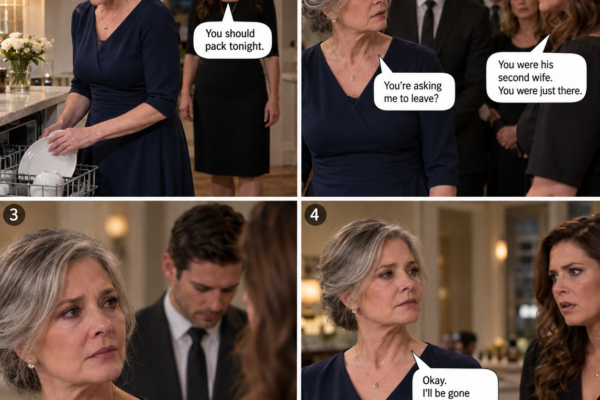
“Talk to My Lawyer,” My Husband Said After Admitting He’d Been Cheating, Calling My Legal Career “Pointless” and Ordering Me Out of Our Home—Even Though He’d Spent Years Handing Me His Contracts, Employee Problems and Late-Night Business Emergencies Because the Lawyer He Mocked Was the One Quietly Keeping His Company Out of Trouble

“Talk to my lawyer.”
Those four words were the cleanest thing Xander said the night our marriage ended.
Everything before them was messier.
I had been married to him for eleven years.
Long enough to remember the apartment where we started.
Long enough to remember when dinner out required checking the bank balance first.
Long enough to remember Xander telling me he wanted to build something of his own.
I believed in him.
That part of the story matters.
People sometimes rewrite unhappy marriages backward and pretend every year must have been terrible.
Ours wasn’t.
We laughed.
Traveled.
Had good Christmases.
Shared jokes nobody else understood.
There had been love.
Then success changed the temperature of the room.
Xander started a logistics technology company with two friends.
At first, it occupied one rented office and had six employees.
Then twenty.
Then sixty.
By the time our marriage reached year eleven, the company had a downtown office, regional clients and the kind of valuation Xander mentioned casually while pretending numbers did not matter to him.
My career developed differently.
I became an employment lawyer.
I loved the work.
Not because it was glamorous.
Usually it wasn’t.
Real law involves far more reading than courtroom speeches.
I represented employees and small companies.
Handled disputes.
Negotiated settlements.
Advised clients before manageable problems became expensive ones.
I was good at it.
Eventually I became a partner at my firm.
Xander congratulated me.
Then immediately noted that his company made more in a quarter than my entire firm did in a year.
He framed it as a joke.
A lot of disrespect enters marriages dressed as humor.
The strange part was that Xander respected my work whenever he needed it.
At first, his requests were occasional.
“Can you read this supplier agreement?”
“Does this clause look normal?”
“One employee is threatening to quit. What can I say?”
I always reminded him I was not his corporate counsel.
He always promised the question was small.
Then the questions multiplied.
One Saturday morning, I spent three hours reviewing a consultant agreement because Xander had promised someone equity without understanding the wording.
Another night, he woke me at midnight because an executive threatened legal action after being dismissed.
I told him exactly what not to put in writing.
The next day, the problem cooled.
Xander thanked me by bringing home takeout.
I laughed at the time.
Marriage.
Teamwork.
That was what I called it.
The company eventually hired accountants, HR staff and outside attorneys for major transactions.
Still, whenever Xander wanted a quick answer without opening a billing clock, he came to me.
I knew where the weak spots were because I had spent years helping patch them.
Nobody at his office called me general counsel.
Nobody paid me.
Nobody needed to.
I was the founder’s wife.
Then Xander began spending more time away.
Conferences.
Client dinners.
Business development weekends.
At first, I believed him.
Trust rarely disappears in one dramatic moment.
It erodes.
A hotel receipt.
A Sunday flight that didn’t match the conference schedule.
A phone turned face down when I entered the room.
A new interest in his appearance.
Then there was Brooke.
Brand consultant.
Smart.
Stylish.
Twenty-nine.
Her name appeared casually at first.
Brooke thinks our messaging is dated.
Brooke found a new photographer.
Brooke says we should sponsor this conference.
Eventually, Brooke appeared in photographs Xander didn’t show me.
I found them on an old laptop he had left logged into a private social-media profile.
There were no explicit pictures.
There didn’t need to be.
The relationship was obvious.
A weekend in Nashville Xander had called a client retreat.
Dinner in Miami.
A hotel balcony in Austin.
One photograph showed Brooke wearing Xander’s college sweatshirt.
I recognized it because I had packed it for him.
That was the detail that broke something.
Not because the sweatshirt mattered.
Because I suddenly saw my own labor inside their affair.
I had packed the bag for a trip he used to betray me.
When Xander called that evening, I confronted him.
He denied nothing.
I expected shame.
He sounded relieved.
Then defensive.
Then cruel.
He said I wasn’t interesting anymore.
My career consumed me.
I didn’t dress the way Brooke did.
I talked about cases over dinner.
I earned less than him.
Then:
“You’re not exactly building anything.”
I remember looking around the home office while he said it.
On the desk sat a contract I had reviewed for his company the week before.
I almost laughed.
Instead I asked whether he wanted to stay married.
“No.”
He answered immediately.
That hurt.
Then he made it worse.
“I’m filing.”
He had already hired Marcus Reed.
I knew Marcus professionally.
Not well.
Enough to know he was competent.
Xander told me anything future should go through him.
Then ordered me to move out before his return.
“Talk to my lawyer.”
Fine.
I did.
But not the way Xander imagined.
I retained my own family-law attorney, Rachel Kim.
I did not represent myself.
Good lawyers know when they are too close to a problem.
Rachel’s first advice was simple.
“No revenge lawyering.”
“I wasn’t planning revenge.”
She raised an eyebrow.
“I know what profession you’re in.”
“Fair.”
We focused on the marriage.
Joint accounts.
Property.
Retirement assets.
Ordinary financial disclosure.
No secret punishment clause.
No cinematic trap.
I did not want Xander’s company.
That surprised him later.
The business mattered to him in a way I no longer wanted anything to matter to me.
I wanted a fair settlement and distance.
The more important decision happened outside the divorce file.
I formally stopped working for his company for free.
That should not have required a formal decision.
But eleven years of blurred boundaries needed a clear one.
I contacted Tara, the operations director.
I explained that I had company documents in the house.
They needed to be retrieved.
Then I sent one brief email:
For clarity, I have never served as counsel to Xander’s company and will not be providing informal legal review going forward. Please direct all legal matters to retained counsel.
I copied Xander.
Nothing accusatory.
Nothing confidential.
Nothing dramatic.
He called within twenty minutes.
HarborPoint.
A major client contract.
He wanted me to finish reviewing it.
I declined.
He accused me of trying to hurt the company.
“I’m doing exactly what you told me to do.”
“What does that mean?”
“You said my work was pointless.”
“That’s not what I meant.”
“It was.”
“Sophia, this is business.”
“No.”
I sat at my apartment kitchen table.
“This used to be marriage.”
Silence.
“You brought business problems into our home because I was your wife.”
“You didn’t value the work enough to treat it professionally.”
“Now we’re divorcing.”
“The arrangement is over.”
Xander told me I was being petty.
I wished him well with HarborPoint.
Then I ended the call.
The company hired outside counsel.
A real corporate firm.
Three lawyers attended the first meeting.
Xander later complained to mutual friends about the invoices.
I heard the number.
It was substantial.
Not because anyone cheated him.
Because legal work costs money.
Especially when you wait until deadlines are close.
HarborPoint still closed.
Two weeks late.
The company survived.
That mattered to me.
I did not want employees losing jobs because my marriage failed.
But something changed inside Xander’s world.
Problems he had once texted to me for free now required scheduling.
Emails.
Engagement letters.
Hourly billing.
His new attorneys wanted documents before answering questions.
They did not pick up at ten Sunday night because Xander suddenly remembered a contract clause.
He hated it.
One month into the separation, he called.
“This law firm is impossible.”
“Then hire another.”
“They billed me for a phone call.”
“That is generally how professional services work.”
He ignored the joke.
“You never did.”
“No.”
“Why?”
I thought about it.
“Because I loved you.”
That shut him up.
Then:
“I didn’t realize.”
“I know.”
It was one of the first conversations where he sounded less angry than confused.
He genuinely had not understood that my time had value because I had given so much of it freely.
That realization did not make me want him back.
If anything, it clarified why leaving mattered.
The divorce continued.
Marcus Reed remained Xander’s attorney.
We first met formally at a four-way settlement conference.
Marcus shook my hand professionally.
“Sophia.”
“Marcus.”
No trembling.
No cinematic revelation.
He was a good lawyer doing his job.
During a break, he said something quietly.
“For what it’s worth, I did not have the full story when Xander first retained me.”
“That happens.”
“He described you as an attorney at a small firm.”
I smiled.
Technically, my firm employed eighty-four lawyers.
“He tends to summarize.”
Marcus almost smiled.
Then the meeting continued.
We reached a framework faster than Xander expected.
I wanted half of the ordinary marital assets as advised by counsel.
I did not demand operational control of the company.
Any marital value associated with Xander’s ownership interest was handled financially through the settlement rather than by making me his business partner.
I wanted no reason to attend another board meeting with him for the rest of my life.
He found that difficult to understand.
“You could make a fortune if you stayed involved.”
“I already have a career.”
Xander laughed bitterly.
“Your law firm isn’t exactly my company.”
“No.”
“That’s why I like it.”
That answer hurt him more than I intended.
Six weeks later, Brooke left him.
I learned through mutual friends.
I did not celebrate.
Apparently the reality of divorce, lawyers and Xander’s constant anger was less romantic than hotel weekends.
He called me afterward.
Not asking to reunite.
Not immediately.
He simply sounded tired.
“She left.”
“I’m sorry.”
“You are?”
“I’m sorry you’re hurting.”
That was different from wanting to fix it.
Xander was quiet.
Then:
“You’ve changed.”
“No.”
I looked around my apartment.
“I stopped doing your half.”
He didn’t understand at first.
Neither had I.
Marriage had become a series of invisible tasks.
Emotional management.
Household organization.
Free legal work.
Making excuses.
Softening his words when talking to friends.
Protecting his reputation in rooms he wasn’t in.
I had called all of it love.
Some of it was.
Some was simply labor.
Our divorce became final seven months after the affair came out.
Rachel and I walked out of the courthouse together.
No celebration.
She asked whether I wanted lunch.
I did.
We ate tacos.
I went back to work.
That afternoon, I had a meeting with a small manufacturing company facing an employee dispute.
The owner was nervous.
“I don’t want this becoming a huge lawsuit.”
“Good.”
He looked confused.
“Good?”
“The best time to solve a legal problem is while it’s still boring.”
That had been my professional philosophy for years.
It occurred to me that it applied to marriage too.
I had ignored small disrespect because none of it seemed big enough to justify confrontation.
One joke.
One late-night contract.
One comment about my salary.
One request.
One comparison.
By the time the affair arrived, the marriage had already trained me to minimize myself.
I stopped doing that.
Not dramatically.
I started leaving work when work ended.
That was surprisingly difficult.
For years, my evening had contained two jobs.
My own.
Then Xander’s.
At six-thirty, I used to finish a client memo and immediately open whatever contract he had forwarded.
Now six-thirty arrived and nothing happened.
The first few weeks felt empty.
Then the emptiness became time.
I joined a Thursday ceramics class.
I was terrible.
My first bowl looked like something recovered from an archaeological disaster.
I loved it.
I started having dinner with friends on weekdays.
I took my mother to a matinee without checking my email throughout the movie.
I slept through Sunday mornings.
One evening, three months after the divorce, Xander emailed.
Not angry.
Subject:
Something I owe you.
Attached was no contract.
No demand.
Just a short message.
I hired a full-time general counsel this month.
Between her salary and outside counsel, I finally understand what I was asking you to do for free.
You were right.
I did not respect your work.
I’m sorry.
I read it twice.
There was a time when those words would have felt like victory.
They didn’t.
They felt like information.
Accurate information.
Late information.
Still worthwhile.
I replied:
Thank you for saying that. I hope things go well for you.
That was all.
I did not ask about Brooke.
Or the company.
Or whether he regretted the divorce.
I shut the laptop.
Thursday.
Ceramics class.
I was already late.
At the studio, my friend Maya had saved me a seat.
“You almost missed glaze night.”
“Tragedy.”
I put my phone in my bag.
For two hours, I made another objectively terrible bowl.
Nobody needed a contract reviewed.
Nobody asked me to solve a staffing issue.
Nobody compared my salary to theirs.
When class ended, I carried the unfinished bowl toward the drying rack.
My name was written on the bottom.
Sophia Mercer.
My maiden name.
I had started using it professionally again after the divorce.
For weeks, seeing it on emails felt strange.
Now, pressed unevenly into wet clay, it looked exactly right.
I placed the bowl on the shelf.
Then turned off my phone before driving home.
Xander once told me my work was pointless because it did not make as much money as his.
For years, I answered disrespect by proving how useful I could be.
The divorce taught me something better.
My value was never supposed to depend on how many problems I could solve for someone who refused to respect the person solving them.
Sometimes taking your life back does not look like winning someone else’s company.
Sometimes it looks like leaving their problems on their own desk.
And discovering your evenings were yours all along.