My parents spent years telling me they “couldn’t afford” to celebrate my birthdays or milestones—but somehow they always found money for my younger brother’s ballroom parties, expensive gifts, trips, and even a new car
“They couldn’t afford it.”
That was the explanation I heard throughout my childhood.
Birthdays.
Trips.
New clothes.
Anything that involved me and cost more than the absolute minimum somehow arrived during a financially difficult year.
Mom always delivered the news gently.
“We’d love to, honey. We just don’t have the money right now.”
And I believed her.
Why wouldn’t I?
The problem was that our financial difficulties seemed strangely selective.
My younger brother Jason was four years behind me, and somehow the rules changed whenever he needed something.
One birthday of mine captures the difference better than anything else.
I was turning eleven.
I came home from school wondering if there might be a cake.
Not a party.
Not something expensive.
Just proof that someone had planned ahead.
Mom met me in the kitchen holding a paper bag.
“We didn’t have time to do much,” she said. “But I got you something on my lunch break.”
Inside was a blueberry muffin.
It was partially crushed.
A single bent candle had been pushed into the top.
We lit it with a lighter.
Mom sang.
Dad watched a game from the other room.
Jason complained about the smell of the candle.
That was the whole celebration.
I didn’t cry.
I had already started learning that showing disappointment created another problem for my parents to manage.
So I smiled.
Said thank you.
Ate the muffin.
Whenever I tried to mention the difference between my birthdays and Jason’s, the conversation changed.
“We’re doing our best.”
“You know we love you.”
“Things are hard right now.”
Maybe they did love me.
But love looked very different depending on which child received it.
Jason had birthday parties with decorations and rented spaces.
One year, gold balloons spelled his name across a ballroom wall.
My parents talked about his celebrations weeks in advance.
My birthdays disappeared completely for years at a time.
Then Jason turned seventeen.
A blue Honda Civic appeared in the driveway with a bow attached.
Dad filmed him walking outside.
Jason shouted and jumped.
Mom laughed.
I watched from the window.
My seventeenth birthday had passed without even a card.
When I asked for something I needed, money was tight.
Yet there was money for Jason’s driving lessons.
His senior trip.
His college dorm.
Those weren’t luxuries, according to my parents.
He needed them.
I was the child who didn’t need much.
That became the family story.
Emily is independent.
Emily understands.
Emily will be fine.
At first, I accepted those descriptions as compliments.
Later, I understood what they allowed everyone else to avoid.
At nineteen, I came home from college for Christmas.
My parents told us ahead of time that there would be no gifts that year.
“We want to focus on family.”
I agreed.
Christmas morning, Jason walked downstairs to find a new game console, expensive headphones, and several games.
Mom immediately explained.
Some of it was supposedly from his godfather.
They hadn’t wanted to “ruin the tradition.”
I stood there holding a cup of instant coffee.
That was the first time I admitted something to myself.
This wasn’t accidental.
There was a pattern.
Jason’s disappointment demanded action.
Mine demanded maturity.
Still, I told nobody.
I didn’t talk about it with friends.
I never told a boyfriend.
I didn’t take it into therapy.
I simply carried it.
After high school, I didn’t bother asking my parents for college help.
I sat at the kitchen table before freshman year with bills and a spreadsheet, figuring out tuition and living costs myself.
Mom looked over my shoulder.
“You’re always so organized, Emily. It’s such a blessing. You don’t need much.”
Then she walked away.
Jason had been on academic probation more than once.
He still received a new laptop and dorm furniture.
I worked two jobs.
A bookstore during one set of hours.
A dental office during another.
I studied whenever I could.
I lived cheaply.
Jason struggled academically and received support.
I succeeded and received silence.
Yet I continued attending family gatherings.
I brought gifts.
Listened to my parents talk about Jason.
His semester abroad.
His latest relationship.
The job an uncle helped him get.
His travel stories.
Whenever I mentioned my work, conversations drifted elsewhere.
Whenever I mentioned struggling, everyone became uncomfortable.
So I became quieter.
Visits became shorter.
Calls became less frequent.
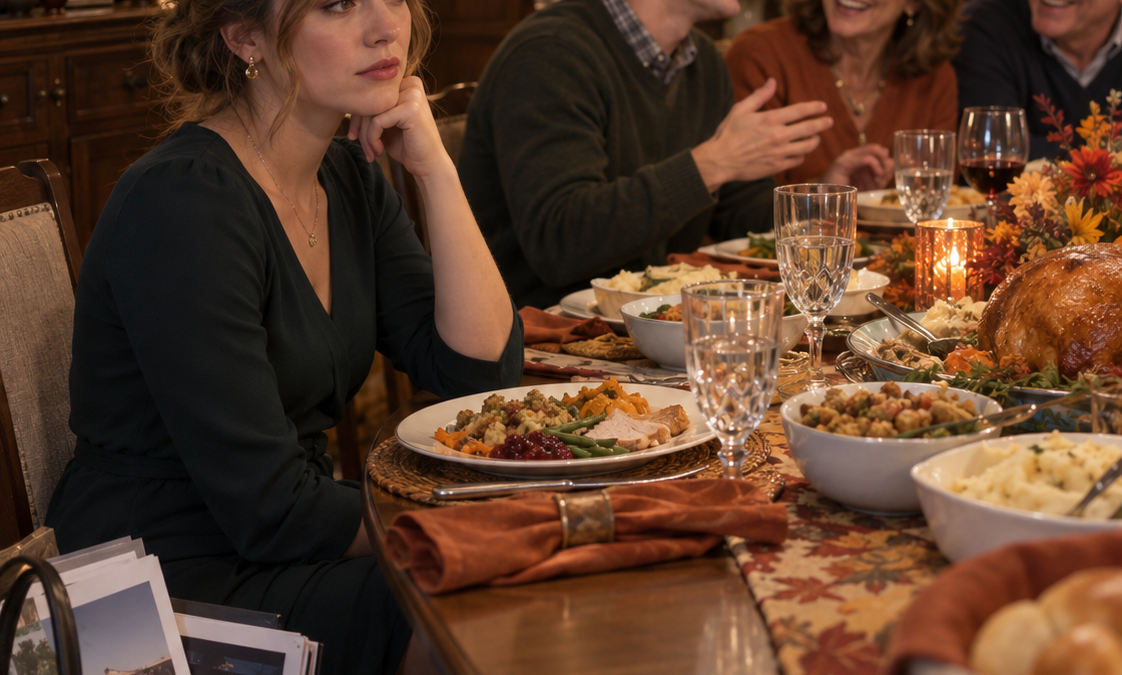
Then came one Thanksgiving that finally broke something.
I had just landed the biggest freelance client I’d ever had.
Years of low-paying projects had finally produced an opportunity that made me feel like my career might become something substantial.
I was proud.
I arrived for Thanksgiving wearing a dress I loved.
I brought good wine.
I even had a few printed examples of my recent work with me.
I hoped someone might ask.
Nobody did.
Dinner revolved around Jason’s trip to Miami.
The story involved his friends, too much partying, and a lost passport.
My father laughed harder than I’d seen him laugh in months.
Mom cried from laughing.
Jason loved the attention.
I sat there eating cold stuffing.
For a moment, I pictured the dinner from outside.
And suddenly it looked absurd.
The entire family orbiting the same person.
Again.
I left early.
Nobody noticed.
My thirtieth birthday came later.
By then, expectations were low.
Still, some irrational part of me waited.
The child with the crushed muffin was apparently still inside me.
Waiting for someone to remember.
Eventually, a message arrived explaining that things had been hectic.
I didn’t answer.
That was new.
Usually, I would have replied immediately.
“No worries.”
“It’s okay.”
“I understand.”
This time, nothing.
I stopped performing forgiveness before anyone had even apologized.
The distance that followed felt powerful.
Not because I thought my silence hurt them.
I wasn’t convinced they noticed.
It felt powerful because I finally stopped protecting them from what their neglect looked like.
By my early thirties, my life had become more stable.
I had spent years freelancing.
At first, the work was unpredictable.
I chased invoices and answered emails at strange hours.
People around me assumed I would eventually quit and find something safer.
I didn’t.
Freelancing represented control.
If I succeeded, I had earned it.
If I failed, the failure belonged to me too.
No favoritism.
No family hierarchy.
No Jason.
About five months before I bought the house, I received an inquiry from a midsized technology company.
They had recently raised significant funding and needed someone to help guide financial strategy during growth.
Someone I’d worked with years earlier had recommended me.
The contract was enormous compared with what I was used to.
A six-figure retainer.
My first reaction was fear.
They were treating me as the expert.
Not the assistant.
Not the dependable person in the background.
The expert.
I said yes.
Three months later, they renewed.
Then two other companies came through referrals.
For the first time, I had more than enough to breathe.
I didn’t tell my family.
Some victories need quiet before other people’s voices are allowed near them.
Then I found the lakehouse.
It was about two hours outside the city.
Tucked among trees.
A wraparound porch.
Wide windows.
A private lake stretching beyond a small dock.
Nothing flashy.
Nothing chosen for anyone else’s approval.
The first time the realtor showed me through the house, I felt strangely calm.
The place represented something I had spent my life waiting for.
Not wealth.
Belonging.
I signed the papers.
Moved in on a Friday.
There was no party.
No champagne.
Just a rented moving truck, cardboard boxes, pine in the air, and fresh paint.
That first night, I slept on an air mattress.
My laptop rested on a box.
I ate takeout and listened to water move gently against the dock.
Then I took a photograph.
I was sitting at the edge of the dock in an oversized hoodie holding a coffee mug.
The lakehouse sat behind me.
Water stretched into the distance.
The photograph wasn’t glamorous.
That was why I liked it.
I posted it.
Four words.
“Thanks for the motivation.”
No tags.
No names.
No explanation.
Then I put down my phone.
For several hours, I enjoyed the quiet.
When I finally checked the screen, the reaction had already begun.
Three missed calls from Mom.
Two from Jason.
One from Dad.
Mom texted first.
She wanted to know what the post meant.
Jason accused me of throwing shade online instead of behaving like an adult.
Dad left a voicemail I didn’t listen to for two days.
Other relatives joined in.
One cousin made a passive-aggressive comment about hoping the family would be invited to my next party.
An aunt informed me that Mom was hurt.
Suddenly, one photograph of a peaceful place had become a family crisis.
I didn’t delete it.
Not because I wanted to hurt anyone.
Because I was tired of erasing myself to make them comfortable.
My silence throughout childhood had never meant everything was fine.
It meant I had survived by becoming quiet.
Now I had built something entirely without them.
I wasn’t going to pretend it didn’t matter.
Their response became predictable.
Mom called relatives.
The story changed.
I had become overly sensitive.
I had misunderstood my childhood.
I had distanced myself.
Jason sent another message.
“So I guess I’m the villain now.”
Then he reminded me that Mom had cried.
For the first time, I didn’t explain myself.
Eventually, though, I realized I wanted one conversation.
Not to apologize.
Not to convince them.
To say what had never been said.
So I invited them to the lakehouse for dinner.
A single evening.
Mom accepted immediately.
Jason replied with a thumbs-up.
Dad said nothing, but came anyway.
The night they arrived, I cooked because I needed something to do with my hands.
Mom complimented the house cautiously.
Jason wandered around asking questions.
How much had it cost?
What was the mortgage?
Who helped with the down payment?
That question almost made me laugh.
No one.
That was the point.
We sat down as the sun dropped behind the lake.
For a few minutes, everyone behaved politely.
Then Mom brought up the post.
“I wish you’d just told us you felt that way instead of putting it online.”
Jason rolled his eyes.
I looked at both of them.
They still didn’t understand.
They hadn’t come to ask what my life had felt like.
They had come to repair the story they preferred.
So I let them talk.
Mom said I’d become distant.
Jason said I’d always acted as though I were better than everyone.
Dad mostly remained silent.
They explained my childhood back to me as though I hadn’t lived it.
Eventually the plates were cleared.
I left the table briefly.
When I returned, I was holding three small envelopes.
One for each of them.
Inside each envelope was a single sentence.
“Thanks for the motivation.”
Mom read hers twice.
Dad stared at his.
Jason laughed sharply.
“You’re so dramatic.”
He crumpled the paper.
I sat down.
For once, his reaction didn’t matter.
I looked around the table.
“I used to think being ignored meant something was wrong with me.”
No one spoke.
“I thought if I worked harder, achieved more, needed less, eventually you’d notice.”
Mom looked down.
“But what I built here taught me something.”
I looked around the house.
The windows.
The lake beyond them.
The table I’d paid for.
The life nobody had handed me.
“I don’t need you to notice anymore.”
The silence that followed wasn’t comfortable.
I didn’t rescue them from it.
For most of my life, I had rushed to smooth over awkward moments.
That night, I let the awkwardness belong to the people who created it.
They stayed another twenty minutes.
Mom picked at the edge of her envelope.
Dad barely spoke.
Jason sat with his arms crossed.
Eventually, they stood.
Mom thanked me for dinner, though the words barely had sound behind them.
Dad mentioned traffic.
Jason walked toward the door.
Before leaving, he muttered:
“You always had a way of making everything about you.”
Years earlier, that sentence would have destroyed me.
That night, I nearly smiled.
My life had finally become about me.
That was exactly what bothered him.
I watched them walk down the stone path toward their car.
I expected victory.
Instead, I felt calm.
After they left, I stayed at the table.
Cold food.
Half-empty glasses.
Three envelopes.
I felt grief.
Loneliness.
Release.
And underneath everything, a quiet kind of joy.
Not the joy of defeating someone.
The joy of realizing I no longer needed permission to become myself.
The following days were quiet.
No calls.
No messages.
For the first time, their silence didn’t feel like punishment.
It felt like room.
I worked.
Walked along the lake.
Met with clients.
Started laughing more.
The performance was over.
A week later, my friend Lena visited.
We sat at the end of the dock with our feet near the water.
She had seen the photograph.
She knew enough to understand there was more behind it.
“Do you feel better?” she asked.
I thought for a while.
“I feel free.”
That was the closest word I had.
For years, I assumed the forgotten birthdays were the deepest wound.
They weren’t.
Neither were the missing gifts.
Or the car Jason received.
Or the parties.
Those were evidence of something larger.
The real damage came from never being fully seen.
My family had decided I was easy.
Independent.
Strong.
So they used those qualities as excuses not to show up for me.
The strange thing is that the same independence eventually became the foundation of my escape.
They thought my lakehouse was a weapon pointed at them.
It wasn’t.
It was proof that I had stopped waiting.
The photograph wasn’t revenge.
The dinner wasn’t revenge.
The envelopes weren’t revenge.
They were corrections.
I was rewriting a story that had always placed me somewhere in the background.
Jason eventually unfollowed me online.
Mom still sends occasional polite messages.
Dad remains mostly silent.
I don’t know whether any of them will ever understand.
I no longer need to know.
Some mornings, I sit at the edge of the dock holding coffee and watch the lake move under the early light.
There is no applause.
No birthday cake.
No family crowd.
No one telling me they are proud.
And the silence feels nothing like the silence I grew up with.
That old silence told me I didn’t matter.
This one belongs to me.
Maybe one day my parents will understand that the house wasn’t the point.
Neither was the photograph.
Neither was the caption.
The real message was simpler.
I had spent most of my life standing at the edge of someone else’s celebration.
Now I was finally willing to stand at the center of my own.